Archive for the 'pearl farm' Category
With great pleasure and satisfaction we announce the presentation of three pearl necklaces for the year 2010. As with all previous pearl necklaces that have been produced in Mexico since our pearl farm started operations, these necklaces are made using pearls from several crops or pearl-harvests; for these 3 necklaces, we have used pearls from the 2010, 2009, 2008 and even 2007 crops. You need extreme patience in order to produce a good string of pearls.
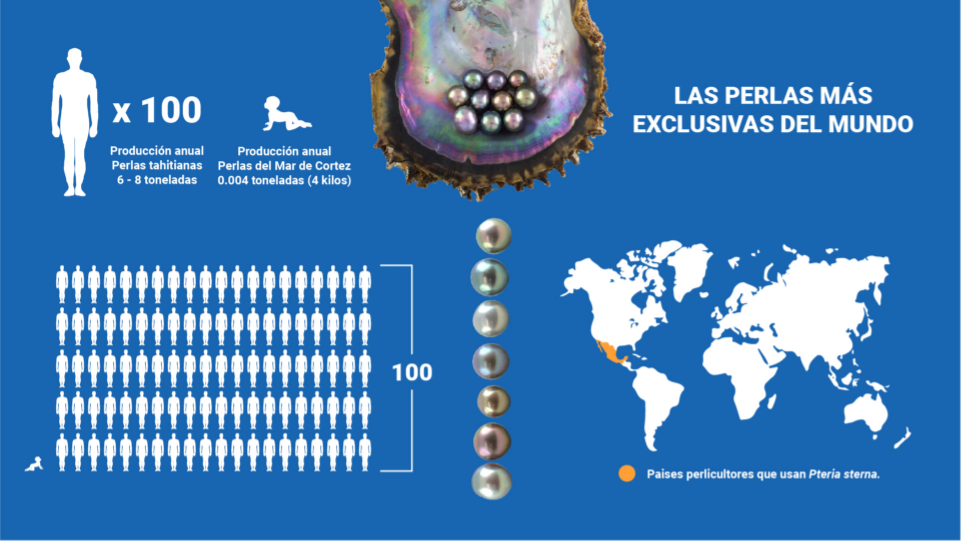
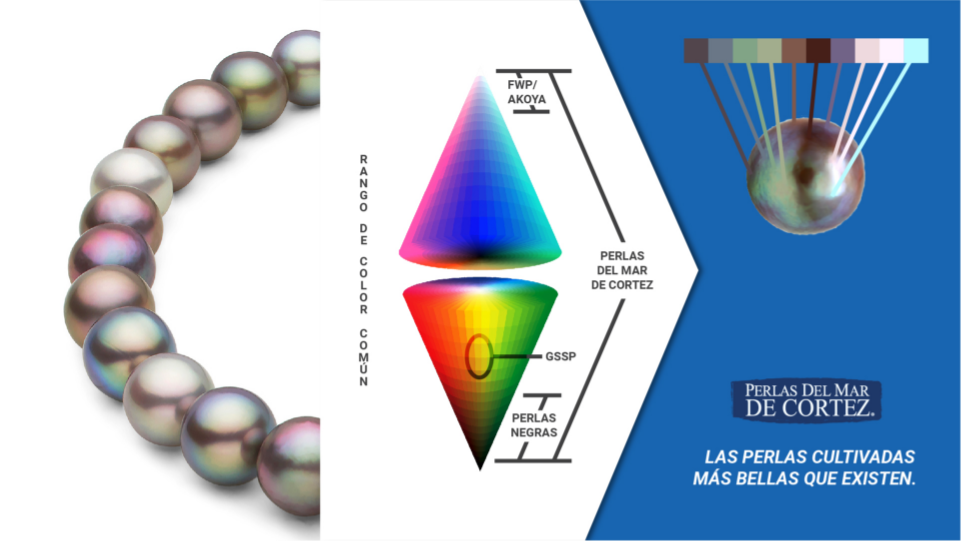
What makes these necklaces so special? Well, they consist of pearls produced in Mexico’s Gulf of California, a region known worldwide for its pearls, and these are cultured using a limited-production (4 kilos) scheme, these are the only cultured pearls that are produced under the “Fair Trade Gems” standards, the only cultured pearls that are produced using a “winged pearl oyster”: the “Rainbow-Lip Pearl Oyster“ or Pteria sterna, thus they are the rarest cultured pearls produced in the world and they also display a pink-red fluorescence under long wave UV rays, and are some of the very few cultured pearls that do not receive any “embellishing” treatments (physical nor chemical) … there are many more things to say about how special these pearls are, but this is just to lay the basics.
What we now need to do is present these three strings of pearls from the 2010 edition:
Necklace 2010 – A
This one consists of a graduated necklace with a length of 20″ (50.8 cm), made with 49 baroque pearls with a size (diameter) of between 8.0 and 8.7 mm, using “B” grade “Cortez Pearls” (“B” grade means that there are skin imperfections on the pearl and that its luster is not very high), the central pearl measure 8.7 x 9.1 mm . However, with its light gray color, unique shapes and its iridescent pearls makes it a truly exceptional piece. It has a simple yellow 18 K gold brooch.
This is an excellent pearl necklace when you consider its price:benefit. It is a baroque pearl necklace, but these pearls are soft baroques (not by human action), in short, although these pearls are asymmetrical shaped they posses very soft shapes that are almost spherical in appearance, thus they look “round” from a certain distance. It is quite uncommon for our Gulf of California cultured pearls to have a perfectly round shape (the reasons will be explained in a future post), thus our spherical shapes attain a far greater value than that of the most common shape: the asymmetric or baroque shapes-so this necklace achieves a relative low cost with great looks or “more bang for your bucks”.
This graduated multicolored 19″ (48.26 cm) pearl necklace consists of 51 baroque pearls with a size between 8.0 & 8.6 mm (diameter) and made with “A” and “A+” grade pearls (this means very good natural luster and a clean pearl surface) of exceptional colors. The result is a rainbow-like necklace with red, green, blue gray, black and purple pearls … As with the previous necklace, it features a plain 18K yellow gold brooch.
Special Edition “Bicentennial” 2010 Pearl Necklace
This is a truly a unique Cortez Pearl necklace, a piece of jewelry fit for a Queen and truly something that very few can own. We’ve placed this necklace at the same level of delicacy -for want of a better word- as some of our finest necklaces such as “Stella Maris” (2009) and “Bohéme” (2008). The central pearl is a gorgeous purple pearl (11.6 mm) with incredible green overtones (obtained from the 2010 harvest).
This 19″ (48 cm) graduated multi-colored pearl necklace consists of 49 near-round Sea of Cortez Cultured Pearls with sizes between 8.7 and 11.6 mm (diameter), and was made using the only “A+” and “Gem” grade pearls, featuring the most intensely colored pearls available, the highest natural luster and the best surface (“skin”) purity possible using only non-treated pearls. This necklace does not include a clasp, since the buyer usually acquires a specially made clasp for such a unique piece.
So far we have named this necklace as “Bicentennial” (Mexico turns 200 years old as an Independent country this year) but this name will be changed by the owner: in the purest pearling tradition these unique necklaces are named or are “christened” in the manner of other famous necklaces or Pearls of old. In today’s world, the vast majority of necklaces produced do not even deserve a nickname… but high quality pearls with a limited production are still worthy of this distinction.
Where are the other Cortez Pearl Necklaces?
Since our Bacochibampo Bay farm started producing loose cultured pearls in the year 2000, we have only managed to produce eight special pearl necklaces -with characteristics similar to those of the “Bicentennial” necklace- and we have always wanted for these to remain in Mexico, but this has not always been possible. So where are these necklaces? Here’s the list:
- 3 necklaces in Mexico, including the three most perfect and beautiful: “Stella Maris”, “Bohéme” and “Balandra.”
- 2 in the United States of America (“Maria” and “Isabella”)
- 1 in Italy
- 1 in New Zealand
Understandably, the owners remain anonymous. In the case of “Bohéme” it had the distinction of appearing in the book “Pearls” by gemologists Hubert Bari and David Lam, a book where the authors state (on page 86) the following about the “Sea of Cortez Pearl”: “It is perhaps the most beautiful pearl to have been cultured up to now” (Hubert Bari & David Lam. 2010. Pearls. Skira . Italy. 336 pages).
Where will the “Bicentennial” spend its Time? What will be its final name? That will be known soon …so, stay tuned!
Natural Pearls…this small phrase can mean different things depending on which portion of the food chain you are located in, so it can either mean utter nacreous ecstasy or feverish anger. Whatever your feelings are, every year we have the fortune of finding a few natural pearls within our farm-raised “Rainbow Lipped Pearl Oysters” (Pteria sterna). This quantity varies tremendously depending on environmental conditions (although some people have gone far to suggest that this depends solely on the actions and decisions taken by certain Political Party members…but no, it is certainly not the case) and the way these conditions become more propitious for the development of certain bio-elements (just a fancy word for “little water bugs”) that are normally found in our oceans.
For us, 2007 was an astounding year in Natural Pearl production, whereas 2008 & 2009 were not very productive in yield, but we did find a couple of very exceptional pearls (see “The Virgin’s Pearl” account of this same Blog). This year seems to be more similar to 2007 in pearl yield and quality.
So, before we proceed with the data from this year’s natural pearl harvest, let us watch a short video on natural pearl harvesting (taken from the 2007 natural pearl harvest):
If you paid close attention to the video, you will have noticed that all natural pearls were found inside a thin, semi-translucent membrane that was attached to the oyster’s mantle. This membrane is known as the “pearl sac” and it is where the pearl develops…in the same way a baby would develop inside a womb. A similar “pearl sac” is formed to produce a cultured pearl, but in this case the pearl sac develops inside the oyster’s gonad and due to Human intervention. Thus, when we find a natural pearl it is quite a surprise (similar to when you are told your wife is expecting twins…trust me on this), there is no Human intervention in their production. To notice the differences between the harvest of natural pearls (the video above) and that of cultured pearls you can now watch this other video:
Now that you have seen both videos you can realize how differently these pearls come to see the light of day or are “born unto the world”. Another significant difference between natural and cultured pearls is their size: most naturals we obtain are in a size range between 1 to 7 mm, whereas the smallest cultured pearls we obtain measure 8.3 mm in diameter. But perhaps the most striking difference would be quantity: you always obtain many more cultured pearls than natural pearls.
In a future post we will talk more in detail about how natural pearls are produced: their incidence, what causes them to appear (a grain of sand of course!!! sure…maybe it was a politician that came up with such an answer), but for the moment I just want to post some photos of some of this year’s natural pearls…let us begin!
This “cute” little natural pearl has quite some personality. Measuring 1 cm at its widest, it has the shape of a toon-like tortoise, complete with a little eye.
It is not the prettiest natural pearl we’ve harvested here, but it now belongs into a select group of “unconventional” pearls we’ve found, such as: doves, cats, hearts, aliens (pretty certain it was a so called “Gray“) and the “American Classic”: Mickey Mouse.
The next pearls are much more beautiful, but more “pearl shaped”, and by this I don’t mean “round”. Very few natural pearls we’ve harvested (out of hundreds in our 16+ years of work) have been perfectly round, and those that have this shape are usually very small (less than 2 mm).
Now we have a pair of “good sized” (7 mm diameter) baroque shaped natural pearls, slightly flattened (something quite normal in natural pearls). Their main color is dark so they would be considered “black pearls”…a term that I don’t particularly like because the Gulf of California Pearl is much more colorful. The one to the right has a red-wine coloration (probably Pinot Noir) and the one to the left has a blue-green-violet coloration.
Now, we have a pair of pearl trios. The first one in sizes around 5 mm in diameter, but I believe they are even more beautiful than the larger ones: truly a case of “Bigger is not necessarily more Beautiful”. And the following trio (in sizes of 3 mm) are even more striking: some pearls even display the much coveted and desired “Fish Eye” effect.
These little pearls have very strong overtones, the one in the center having the most intense “fish eye” effect.
And to wrap it up for today…a beautiful pair of 8 mm natural pearls with very different colors: one is light gray with a strong violet overtone, the other one has a dark electric-blue coloration. One reason why pearls were known as “Unios” in the Latin language of Ancient Romans is because they were clearly unique, distinctive. These natural pearls are truly deserving of such name…but their Gulf of California Cultured Pearl counterparts are just as unique as their famous predecessor…you will not find any “Clonios” around here.
In our next edition: Cortez Keshi Pearls from the 2010 Harvest. See you next week!
It is finally here…that special moment that takes place only once every year here at our Pearl Farm: the HARVEST. This year we expect to have a lower yield of pearls in comparison with last year’s, but we believe this harvest will be more beautiful than 2009′s.
All these pearls will be harvested from our Pearl Farm in Bacochibampo Bay, Guaymas, Sonora, México, in the central portion of the Gulf of California or Sea of Cortez. The pearls we produce are exclusively grown in one of our native pearl oysters: the “Rainbow Lipped Pearl Oyster” (Pteria sterna). I want to use this opportunity to clearly state that WE DO NOT PRODUCE pearls using the local “Black Lip Pearl Oyster” (Pinctada mazatlanica), because there are some “experts” that say we do, but we don’t. You can use a nifty UV light to see how our pearls glow pink-red, an attribute of pearls produced from the “Rainbow Lipped Oyster”.
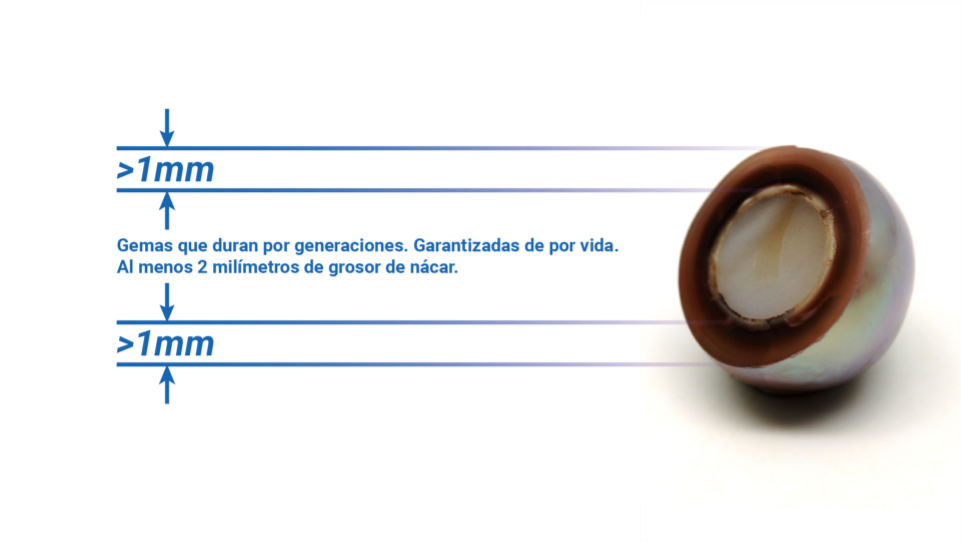
Some interesting facts about this harvest is that we will -apparently- have softer and rounder shapes, with a very thick coating of nacre. As an example: we obtained a 13.7 mm (diameter) pearl, and we know -for sure- that the largest bead employed that day measured 9.5 mm in diameter…thus we know it has a 4.2 mm thick coating, or 2.1 mm per side which is what you would expect out of a good South Sea Pearl.
Colors this year seem to be more on the Lighter side…mostly light grays, but the colorful pearls are very colorful and intense, as you will notice on the photo below:
The next photo displays some of our light colored pearls, but when they have baroque shapes they will display very intense iridescence.
The intense colored pearls are coming out in stunning shapes and with great overtones…
Another one…
Finally, a selection of Gem+ grade pearls: great natural luster (our pearls are NEVER polished), excellent surface (clean, unblemished), intense colors and beautiful overtones…

And this great “Deep Purple” pearl, round, measuring 12 mm in diameter…this one will become the center piece for this year’s pearl necklace.
Finally, the pearl I came to Love from the minute it was plucked out: I christened it as “Matryoshka”, a most Slavic name for such a Mexican Pearl…but once you see its shape you understand why I named it this way. It has the most intense Aubergine color I have seen in years…
Will continue adding updates as the harvest proceeds…
That’s right, we have already published on the web -thanks to YouTube- our Original video on “Sea of Cortez Pearls.” This was a project we had in mind for several years, but we never had the time to invest in an “original production”. The video reached a good compromise between what we wanted to play on the video, yet we could not achieve such as: we wanted a video clip of a hurricane in action on the pearl farm … but when this happens one usually take refuge in your home, or special clothing (we could not shoot a troop of “Spanish Conquistadores” trudging through the desert) and,we were not able of getting a professional narrator (primarily due to time constraints) for the Spanish version of the video… but the English version has superb narration.
Despite being produced in 2008 (it achieved “Gold” status on December of that year) we had the video available only on DVD throughout 2009, and it was until this year that we decided to share it publicly.
The video is presented in two parts due to time constraints imposed by YouTube. The first part is a presentation of the Gulf of California Pearl:its lore and History; the second part deals with the commercial cultivation of pearls in Guaymas, Sonora. So, with no more hesitation: we hope you enjoy the video…
We thank all those who participated directly in this beautiful project, specially the staff of “Cheque’s Films” from our good friends Ezekiel “el Cheque” Núñez and Esteban Ibarra (who were in charge of cameras and video editing), the original “Perlas del Mar de Cortez Soundtrack” was the work of Jaime Delgado Avelar,the excellent voice narration by the professional narrator Charlie Bloomer, and photos taken by another good friend, Alberto “el Gordo” Tirado. Another couple of good video details provided by our friend Benito Sarmiento (thank you for allowing us to use your videocam and “casing” as well as for lending us your aerial video of Bacochibampo Bay), and finally, the great 3-D work of the “Spanish Galleon” done by Abraham Castro of “Onix” fame. In all, this video was made 100% in Guaymas, Sonora.
The script for the video was produced by us (“pearl trio”), in addition to video footage and photos that we did and incorporated into this video.
Additional thanks? Sure! There are many people who we would like to give special thanks, and amongst them we have:
“The Yaqui Diver”/Adrian Amarillas Casillas, our friends Rocio Mendoza and Diana Alvarez, as well as to Karla Valdez, Sergio Farell -our friend and former mentor- the ” Tec de Monterrey” for showing faith in our school project and, of course, our group of “Yaqui Workers” led by Jesus “el Pipi” Valenzuela.
I invite you to please leave your comments … I know that in order to leave a comment you are required to use an e-mail account, but for those who do not want to leave a comment because you will “need” to use your e-mail, you can do the following: there is no need to enter a real email … instead use this fake e-mail chachalaca@chachalaca.com.mx (“copy & paste” and place in the appropriate field) and you will see that it is not necessary to use your personal mail.
See you next week!
Welcome to our “Sea of Cortez Pearl” Blog-site. We are a group of Pearl Farmers located inside the Sea of Cortez (Gulf of California, Mexico) and our plain intention is to open up a channel of communication between us and those of you that have been -or will be- our guests-visitors at our website and pearl farming facilities, a place where we can talk about subjects that revolve around our beloved marine gem: the environment, quality, cultural heritage, stories & myths, jewelry and jewelry designers, pearl farming and our pearl oysters.
Welcome! and stay tuned for new posts.

- How do pearl farmers look like?
Manuel, Douglas & Enrique – Owners and Founders of Perlas del Mar de Cortez
Douglas